Sakaridis's Death and the Papazoglou Brothers' Trial
Cartes Postales from GreeceSakaridis's Death and the Papazoglou Brothers' Trial marks the point at which the Papazoglou family’s financial ruin becomes a personal catastrophe: Manos strikes a police officer who has repeatedly come to the failing Hotel Pyrgos, and the officer is later found dead. The confrontation sets in motion the trials of Manos and his brother Stephanos, destroying the succession Apostolos had expected to arrange.
The confrontation at the hotel
Manos’s violence follows a steady collapse in his circumstances. The debts have become impossible to pay: interest piled upon interest exceeds what he could repay in a lifetime, even if the hotel stayed full. On the same day Stephanos is charged, the last guest leaves the Pyrgos, and the final staff member quits after six months without wages. The hotel is emptying as its financial obligations grow beyond reach.
When someone hammers on the reception door, Manos tiptoes to a small office to see who is outside. He recognizes the local police officer who has been returning regularly in recent months. The officer is checking the time, and Manos notices that he wears the watch Apostolos gave Manos for his twenty-fifth birthday. Orestes Sakaridis had accepted it instead of money during an earlier visit, when Manos was already out of funds. Seeing the watch on the officer’s wrist sharpens the encounter: Manos has nothing left to give, and believes he has nothing to lose.
Manos opens the door and confronts Sakaridis, who asks for the usual payment. Drunk and unsteady, Manos swings the bottle he has been drinking from at the officer’s face. Sakaridis evades the blow and grabs Manos by the shoulders, but Manos wrenches one arm free and drives his elbow into Sakaridis’s stomach with his full weight behind it. The officer falls backward; the side of his head strikes the marble step, and he lies motionless.
Flight and arrest
After the blow, Manos pants for several moments before regaining his breath. The street outside the hotel is deserted, like the Pyrgos itself. He does not touch the motionless officer; instead, he turns away and walks calmly to his nearby car, then speeds off along the coast road, intent only on getting away.
His escape is brief and reckless. Manos runs several red lights, nearly loses control on a bend, and narrowly misses a police car. Its flashing lights and siren bring him to the side of the road. The two policemen who stop him smell alcohol on his breath and put him in the back of their car.
During the drive, the officers hear over the radio that their colleague’s body has been found on the steps of the Pyrgos. The sequence turns Manos’s attempt to flee into an arrest: the officer he left behind has been discovered, and the violence at the hotel is now a matter for the police and the courts.
Trials and the collapse of the hotel empire
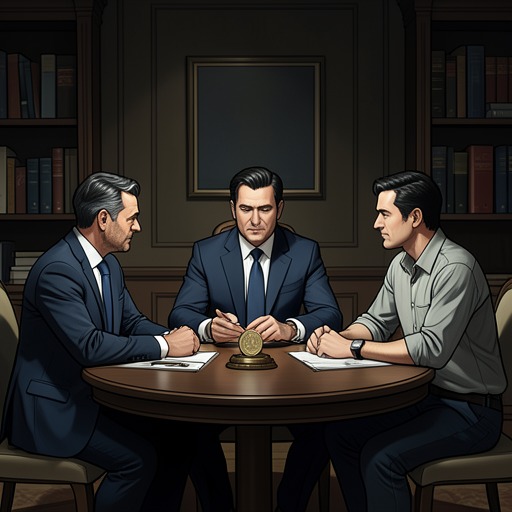
The deaths and charges overturned the succession Apostolos Papazoglou had planned for his seventy-seventh birthday. The day was meant to mark his retirement and the transfer of the hotel empire to one of his sons; instead, both Manos and Stephanos faced trial, with proceedings scheduled to begin in Athens on the same day. Apostolos had to choose which son’s trial to attend. His wife proposed tossing a coin, reducing the intended family handover to a choice neither parent could avoid.
Seven months later, on 29 May, both brothers received manslaughter verdicts. Residents of Patras had not forgotten the dates on which the hotels opened, and their knowing response to the verdicts linked the brothers’ fate to the ominous significance they attached to those dates. The financial reckoning was equally severe: compensation for injured guests and bereaved families could not be met even by selling the entire hotel empire. Apostolos was forced to declare bankruptcy, and the inheritance he had meant to pass on became an unpayable liability.
For years, the hotels’ crumbling remains stood as ghostly reminders of the sack of Constantinople. Their decay kept the family’s catastrophe visible in the landscape, while superstition and religious belief gained a tighter hold. Older passers-by reproached the dead and surviving family alike, insisting that the date should never be forgotten. The ruins thus outlasted the business they had housed, turning its collapse into a warning repeatedly read through local memory and belief.
Local memory and superstition
The aftermath is remembered through two competing explanations of catastrophe. The court names the brothers’ responsibility in the language of manslaughter, while the people of Patras read the verdicts against the dates on which the hotels opened, treating those dates as warnings whose meaning has been confirmed. The ruined buildings extend that reading beyond the trial: likened to reminders of the sack of Constantinople, they become more than the remains of a failed business, carrying an older historical association into the family’s present. The older residents’ insistence that the date must not be forgotten shows how communal memory preserves the event not only as a case of violence and bankruptcy, but also as a cautionary story shaped by superstition and religious belief.